Poetry Magic
Poetry is the use of precise, concise and condensed words that can resonate on many levels, with layers of meaning. Poems are words arranged in patterns of sound and imagery that can create both an intellectual and intellectual response in the reader. Across different cultures and traditions poetry has universal usage, perhaps performed with music. Song lyrics are a different genre, since they are deliberately written with musical information, with refrains and repetitions that do not function as well without the music. Yet, in the right hands, poems can function as song lyrics with exciting results as shown by Gabriel Kahane, Eric Moe, and many more.
The language of poetry can be high art, or the self-expression of emotions, imagination and feelings. Another definition offered for poetry is ‘literature in meter form’, with the written word given rhythm and rhyme in patterns that give the poem shape. Another form of poetry is blank verse.
Shaping the poem
Rhythm in poetry comes from the stressed words or syllables which sound longer and unstressed words or syllables that sound shorter. Combining different variations of stressed and unstressed syllables, gives you ‘feet’, which are arranged within a line or sentence to form meters. The most popular meter is iambic pentameter. Used a lot by Shakespeare, this is a ten-syllable line, consisting of five feet, each with one stressed and one unstressed syllable.
Poetry is creative and can be as serious or as fun as the writer wishes. In its simplest form, poetry is composed of verses or stanzas. The number of lines in a stanza will decide the type of poem that has been written.
Modernist poetry
Modernist poetry is said to cover the years 1890 to 1920 and includes Joyce, Pound, Eliot and Wyndham Lewis among many others. In reality the themes of Modernism cover a period of more than one hundred years, ending in the late twentieth century. Broadly speaking the features of modernist poetry include, in varying degrees:
 Experimentation: moving away from stereotypes into technical innovation, poems were seen to be a ruthless rejection of the past, a deviation from the usual reader expectations.
Anti-realism: themes that question the conventional view, using allusion rather than description.
Individualism: seeing the world through the artist’s inner feelings and mental states, separate from religion, nature, science and society. The extreme self-consciousness creating a stream of consciousness.
Intellectualism: writing became less emotional, more analytical. Posing more questions than answering them.
Cool observation: detached and depersonalized viewpoints and characters, usually informal, sometimes unfinished.
Poetry as an art form
Poetry as an art form is timeless, being easy to relate to and powerful. It is an ancient form of art that remains popular today. Performing poetry is empowering in that it connects you with strangers and can be a different experience each time you hear the same poem, proving that words can be a really powerful tool when used correctly. This does not make poetry different to novels, but the compact and subtle nature of the language of poetry is an attraction to many.
Poetry as a gift of love
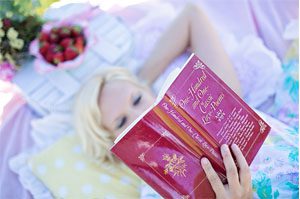 It is sometimes difficult to express our love to another. Yet the gift of love to another is precious. Whether it’s our own unique love poems that tell the story of our heart or whether we choose a poem for our beloved that speaks for us, drawing on the wisdom of culture, whether it be words from I Ching, or one of the poems of Shakespeare, Burns, Rosetti and more. A love poem could become the perfect gift for your 25th wedding anniversary – after so much time together your gift ideas could have come to an end so something personal like this could be the perfect solution!
Poetry for pleasure
Poems bring pleasure to many. Being generally short, focusing on careful word choice and patterns, poems can cover the entire range of human emotions. They can be fun, they can be personal. They can be shared with those you love and shared with strangers too. Reading through poems slowly to allow their message to unravel is an almost meditative experience. If you find a poem that resonates, try reading it aloud as the way poetry sounds when read aloud is as important as the theme or visual imagery.
Poetry for therapy
Poetry can help in dealing with the thoughts and emotions associated with life’s challenges. Writing personal experiences as poetry is a form of therapy for many. For those who do not write, there is also an eclectic mix of poems reflecting the wide range of interpretations around profound events in our own lives. Some poems are philosophical and comforting such as Kahlil Gibran’s ‘On Death’ while others are painfully personal.